My name is Dean St.
John and I'm from Elgin, Illinois.
I'm a senior about to graduate and I just about got through quite a bit of track when I first came to Northwestern because I came from a family whose income was approximately $17 ,000 a year, so quite often we had trouble eating, more or less getting some of the extravagant things that some of the people I met in Northwestern got.
So when I came here and saw people who were having incomes of like $40 ,000 a year, I was like shocked and offended somewhat because I just had never come in contact with that before.
So it took me a while to come around, not to their way of thinking, but to an acceptance of sort of putting up with it and dealing with the fact that I can't pay tuition anymore, etc., etc.
So I'm furious at Northwestern at the moment.
I don't think that for the incredible amount of money I was given the kind of education I had hoped to get, I was given more of an education in how to deal with people who were socially different from me rather than an academic education.
Although that was there, there wasn't enough of that.
So it was too much social amount of academics for my taste.
But I had fun working with all this equipment that I never had ever seen before.
That was the best part about it, working with equipment I couldn't have.
When I first got to Northwestern, in the film division, the group was incredibly tightly knit.
It was like all the faculty and all the graduate students spent an immense amount of time together.
Dana Heidsten got to school about 8 .30 in the morning and he and the other Master of Fine Arts students just spent all their time together.
It was a very intense experience.
The late afternoon you'd knock off and you'd go over to Dana's and drink beer and play darts.
Dana had this large house and Patty Winell also lived there.
There were always a lot of people going in and out and hanging out and everything.
This interaction went on constantly.
Patty Winell was the kind of person who loved this kind of continuous politicking of people.
We were totally at war with the other division in the department, which was the radio television side at that point.
To the point where people practically spit when they mention video or television, it was considered really an inferior form and people didn't work in it.
You had no regard for the people who did.
Everyone was into very heavily theoretical and structuralist influenced avant -garde film.
That was the norm.
It kept going on that way.
It built up a huge energy.
At the same time, I was glad that I lived in Chicago and was separate from it in some ways.
It was a very heady experience.
It was very intense.
It was also very neurotic.
I think people got ripped off a lot in the process.
I think the people who lived that environment had a lot of negative feelings about it in the long run.
I think it was real exploitive of women because some of these faculty were sleeping with the women graduate students.
It created a lot of distrust among the women.
It created a structure where it was real hard sometimes for the following year.
They hired a woman production teacher, Michelle Citron.
She's taught the course since then and traded it off with some other faculty.
At that point, Michelle was then the second woman in the department.
Before that, there was just one woman, Lynn Gardley, and she was seen by the other faculty as just a faculty wife, which was real unfortunate.
Over a period of time, I think things changed.
The culmination of that, particularly women graduate students getting together and some of the undergraduates, and also the department secretaries being part of that, there was issues in the department, an awareness of issues of sexual politics and some room to talk about it.
That created a change.
It created a dynamic that I think was real threatening to the men, to some of the undergraduates who got very upset with it, who were making things like slasher films, films that enacted their obvious fears of what was going on in terms of their own life in the department.
It was a situation where suddenly there were more women involved in filmmaking, more women involved in production, and they were making demands.
They were making demands on the guys to change, and the men found that threatening.
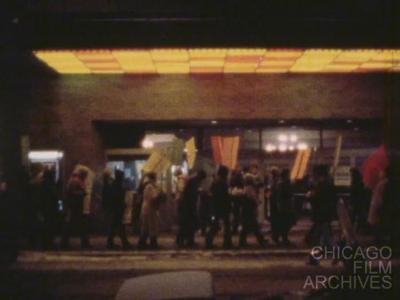
No whitewash conference! No whitewash conference! I don't know, but it's interesting.
I don't know, but it's interesting.
I'm going to kill you.
I'm going to kill you.
I'm going to kill you.
I'm going to kill you.
I'm going to kill you.
I'm going to kill you.
I'm going to kill you.
I'm going to kill you.
I'm going to kill you.
I'm going to kill you.
I'm going to kill you.
I'm going to kill you.
I'm going to kill you.
I'm going to kill you.
Save the party! Save the party! Save the party! Save the party! Save the party! Save the party! Save the party! Save the party! Save the party! Save the party! Save money! Save money! Save money! Save money! Save money! Save money! Save money! Save money! Save money! Save money! Save money! One, two, one, one, two, one, two, one, two, one, two, one, two, one, two, one, two, one, two, one, two, one, two, one, two, one, two, one, two, one, two, one, two, one, two, one, two, one, two, one, two, one, two, one, two, one, two, one, two, one, two, one, two, one, two, one, two, one, two, one, two, one, two, one, two, one, two, one, two, one, two, one, two, one, two, one, two, one, two, one, two, one, two, one, two, one, two, one, two, one, two, one, two, one, two, one, two, one, two, one, two, one, two, one, two, one, two, one, two, one, two, one two, one, two, one, two, one, two, one, two, one, two don't lie, don't lie, don't lie, don't lie, don't lie, don't lie, don't lie, don't lie, don't lie, don't lie, don't lie, don't lie What do we want? We want to see them with the power.
We want to see them with the power.
We want to see them with the power.
We want to see them with the power.
We want to see them with the power.
We want to see them with the power.
We want to see them with the power.
We want to see them with the power.
We want to see them with the power.
We want to see them with the power.
We want to see them with the power.
We want to see them with the power.
We want to see them with the power.
We want to see them with the power.
We want to see them with the power.
We want to see them with the power.
We want to see them with the power.
We want to see them with the power.
We want to see them with the power.
We want to see them with the power.
We want to see them with the power.
We want to see them with the power.
We want to see them with the power.
We want to see them with the power.
We want to see them with the power.
We want to see them with the power.
We want to see them with the power.
We want to see them with the power.
We want to see them with the power.
We want to see them with the power.
We want to see them with the power.
We want to see them with the power.
We want to see them with the power.
We want to see them with the power.
We want to see them with the power.
We want to see them with the power.
We want to see them with the power.
We want to see them with the power.
We want to see them with the power.
We want to see them with the power.
We want to see them with the power.
We want to see them with the power.
We want to see them with the power.
We want to see them with the power.
We want to see them with the power.
We want to see them with the power.
We want to see them with the power.
We want to see them with the power.
We want to see them with the power.
We want to see them with the power.
We want to see them with the power.
We want to see them with the power.
We want to see them with the power.
We want to see them with the power.
We want to see them with the power.
We want to see them with the power.
We want to see them with the power.
We want to see them with the power.
We want to see them with the power.
We want to see them with the power.
We want to see them with the power.
We want to see them with the power.
We want to see them with the power.
We want to see them with the power.
We want to see them with the power.
We want to see them with the power.
We want to see them with the power.
We want to see them with the power.
We want to see them with the power.
We want to see them with the power.
We want to see them with the power.
We want to see them with the power.
We want to see them with the power.
We want to see them with the power.
We want to see them with the power.
We want to see them with the power.
We want to see them with the power.
We want to see them with the power.
We want to see them with the power.
We want to see them with the power.
We want to see them with the power.
We want to see them with the power.
We want to see them with the power.
We want to see them with the power.
Any comment? Any comment? I don't know what this is about so I cannot say much.
Okay.
Well, I was going to explain about how salaries work at Northwestern and faculty salaries in particular.
We get this letter in May.
Now salaries were late this year.
Salary information was real late.
And we get this letter in May that says, this is from the dean, but he quotes from a letter from the provost.
He says, I think it's important that the faculty know that only people of outstanding demonstrated merit will receive salary increases of more than 8%.
Faculty members who merit and receive salary increases of 10 % or more should be assured that they are among the select scholars we want and need to keep.
And so what did I get? I got 9%.
Okay.
Dear Chuck, I am now able to tell you that your salary for the 1981 -82 academic year will be 21 ,250.
As you know, annual increases are determined by merit.
Believe me, the work you do is appreciated.
So comparing what I got with what the other letter says, the policy letter says, I have two years to find another job.
I have outstanding demonstrated merit, but they don't want or need to keep me.
Basically, that's it.
So every year you get one of these letters and it rates you, right? And it helps keep you in line and it helps you keep from messing around and goofing off and stirring up too much trouble.
Last year I got 15 % because they took that away from another teacher.
They were punishing another member of the faculty, Film Division faculty, so they didn't give that guy an increase and they gave it instead to me and Michelle.
Is that guy still there? Oh, yeah.
I'll see, we're only punishing him for one year.
Yeah, I think they straighten them out.
Well, what if you straighten out next year, Trev? If I straighten out? Yeah.
I don't know.
See, the pressure's on.
Maybe you should cut your hair.
I don't know.
You think if I cut my hair I'd get more money? I'd change your beard.
How about if I got a three -piece suit? Yeah, and a tie.
You make your own ties anyway.
Yeah, I don't know.
And you should start drinking beer with the boys, you know.
Drink beer with the boys.
Yeah.
Martini's with the Dean.
Martini's with the Dean.
Chuck, you want to keep your job, don't you? Don't you? Five, four, three, two, one.
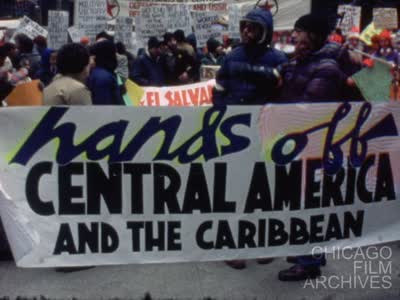
See this? What is it? Is this from Nicaragua? What is that? What is it going to tell me? He wants me to teach film down there? Here's some pictures.
Pictures, pictures.
They want me to come in July and show movies and give a few conferences, but that would be beneficial for the public in general.
Oh, and they've got a stamp.
See this stamp? I've got to get a stamp made up, Chuck, because they won't believe anything I do unless I have a stamp.
Every time you sign your name, you have to have your own stamp.
They've invited you down there.
Isn't this great? It's wonderful.
Aha.
This is great.
It'll tie air.
They've seen a super -ocho.
They'll send trial sandonista.
They're trabajadores.
Oh, boy.
The super -a workshop of the Central Sandinist Group of Workers has recently started its work, and they want me to show some movies and give some conferences, which will not only benefit students but the whole public.
But they also want me to bring information.
And here's some pictures.
Show the pictures.
These are the pictures.
This is the inauguration of the workshop, and there's Commandante Mondesto, Minister of Planning, Jaime Balcazar from the United Nations, and Alfonso Camusio da Gron left, Director of the project.
Now here they're putting up the sign.
Two people are preparing for the inauguration.
Well, Julia, congratulations.
I think that's wonderful.
Well, look at this.
You can actually bring the Jim Criss in person now.
July.
Shit, that's not much time left, is there? Oh, this is a long...
He says don't have any illusions about what you're going to find here in terms of what we've got.
Well, I think you can bring all this stuff down that we talked about.
Sure, I should have bought some more of those cameras.
That might have been $80.
Well, I guess this one isn't going to stay in our house for very long.