Oh gosh, that's why he's not a town man.
Awesome.
By the way, just make sure that both these are right.
Are pilots.
Let me get up to Steve here.
Okay, so this is take one, roll one, three, twelve, eighty -nine.
This is the interview.
Okay, Sue, you're ready.
Anytime, Ivan.
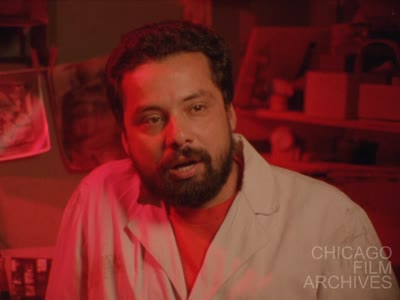
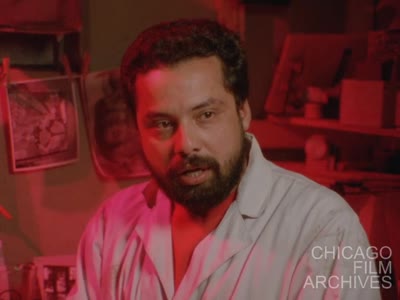
Okay, well, one of the reasons, or something that I saw the difference in colors when I came to Chicago from Puerto Rico, is that probably because Puerto Rico is a tropical island, you see a lot of colors and flowers and everything.
Here, I hardly see any colors, like the buildings.
To me, we don't see the colors.
They are dark gray or brown.
It's not different colors, and that's something that I noticed when I came to Chicago compared to Puerto Rico.
Again, be sure to look at Susan and not at the camera.
Let's do it again.
That was real good.
Just look at the contrast in the colors.
This time maybe tie the murals.
Take two.
Okay, something that I noticed the difference in colors with the murals when I came to Chicago is that compared to Puerto Rico, I mean the bright color that we have there compared to Chicago, every time I walk in the neighborhood, here in Chicago, I see those colors again.
And it reflects some of my, you know, the way I used to see it before in Puerto Rico.
And that's one of the things that caught my attention besides so many other things on the murals.
Okay, stop.
Scene two, take one.
Okay, ready.
Okay, Ivan.
Well, the murals, when we see it, when I see it, I see that they represent us.
I mean, the Latino community, the Puerto Rican community, we are, when I see the paintings, to me, I see my own life in a way.
When we first came to Chicago, there was no newspaper.
I mean, there was, but not informative, I mean, word enough.
So those murals are telling us continuously, remember the reasons why you come to this country.
Don't forget who you are.
And they're controversial.
I mean, they may not, a lot of people agree and disagree.
We all talk about, you know, about the work.
But I like to see it because we have to walk every day and see it.
And it's part of the community.
I respect the people who did the work.
And I believe they did it to help the community.
They may not, we may not agree with their point of view, political or any other reasons, but I agree that they are doing it for the well of the community.
Okay, very good.
Yeah, I thought that was pretty good.
Yeah, we kind of jumped to several questions.
That's okay.
That's good, that's fine.
Yeah, that's fine, don't worry about it.
I realize it's kind of hard to do this.
If someone said to me, six months ago you said, I'd probably go, I didn't mean it.
So don't worry about being sick.
I'm wondering if we...
Scene two, take two.
Okay, when you're ready, Alan.
Okay, for us to be, to get used to live in a new city with new people, people that are not, that we don't know each other in a way.
I mean, this mural helped us create our community.
There was no newspapers around, no other way of communication.
We used to have, there was a few like radio stations, only putting up music all day because probably they didn't have the facility to, reporters or whatever, so they only put music continuously.
And here come those murals, and in a way they were telling us continuously who we are.
And the reason why we came here, and we may not, we may not see now, you know, when we see it now, probably it's not the same like 20, 25 years ago, because everything is changing.
I mean, what I'm telling you now probably is not what's happening right now, because we are growing up.
This is a wider community right now, and we have different groups from Latin Americans and other countries.
But when I first came here, it was not, I mean, we were starting, everything was coming out, and those things helped us in a way, see it every day.
That's one of the reasons I started photographing the murals, because when I photograph one of those and I put it on the wall in my house, someone that comes to my house, they say, I seen that work somewhere.
Isn't it on the corner of this street? So they seen it, but it's not until they sit in my house that they recognize what, you know, now they pay more attention.
They start asking me, why did I photograph that mural? And I used to tell them what I see, you know, on the mural.
It could be political, religions, but they start asking questions.
And I didn't know the artist who put, you know, that was my point of view on the murals to see it.
And, you know, there are so many reasons why they're there that probably a lot of people like the murals, I mean, in the community, because something that I notice continuously is that there are no graffiti on it.
There are a few because there is no way to stop.
But if you look down the block, you see more graffiti all over the walls.
And I don't know why on the murals, the kids respect the murals.
I mean, they're not 100 percent, you know, protected.
But I don't know.
The mural are telling them, you're doing it to yourself and you, you know.
And that's, that's, that's what I see on the murals.
Okay.
Can you tell us how you pick a mural to photograph? What, how did you decide? Again, if you can explain how you pick a mural.
Well, when I pick a mural to photograph, usually I won't go out of my neighborhood to do it.
I mean, I don't, I don't chase, I don't go looking for murals.
It's, I don't know, probably because they're not over, not all over the city in Chicago.
It's like they are in the ethnic group, ethnic communities.
I don't know, probably if I go to a upper class neighborhood in Chicago, they're against that, because that will not look nice in their neighborhood.
So I don't know if that's true or not.
I'm not, you know.
But I've been around Chicago and I only see those murals in certain areas in Chicago.
So when I look into it, I try to study what the artist wants to tell us about what's going on around.
So then I study that, I may not see what the artist wants me to see, but I create my own and I give credit to those guys who are doing it.
And I start looking around, taking photographs, but in a way I believe they represent what's going on.
You know, what's happened to us every day, drugs, dropouts, no housing.
Someone is crying, someone is telling us up and up, I mean, look around you, you have to do something.
Because we're here to stay.
I mean, we're not going anywhere.
We're part of this community and we may not have the power on the media to let people know that we're here to stay.
But that mural there are telling the people, you know, we're here to stay and let's fight, you know.
But not fight in a way that we're going to destroy it.
That we have to educate ourselves and we need more housing, we need better education.
And that we can look forward, we can look.
And, but when I pick up a mural before I photograph, I look into it in different ways.
I study the pictures and I like the colors.
I don't know why I have colors that I like the colors, probably because they're here in Chicago.
And, you know, that's one of the reasons why.
Okay, can we stop for a second? Scene three, take one.
Okay, Adam.
Something else about the murals is that they are very informative about what's going on with the teenagers in our community.
I mean, every morning when I go to the bus stop to wait for the bus, there's a group of people, I mean the students, they're going to school.
But none of them drop a quarter there to buy the newspaper.
They're telling that we're in front of the mural.
But that mural will tell them not to drop out from school, to stay out with drugs.
There's so much information there.
They may laugh at the guy because he's drunk and he's on the floor.
But the artist is telling them this could be you if you don't keep looking toward the future.
And they're telling that I look around and I say, none of them bought the paper.
I mean, not even for the sports section.
I mean, it's like they don't care.
Probably I used to do the same thing.
But right now, that's the way I see it, that the murals are there.
And every time when they had to walk to get the bus, they had to pass by them.
And they lean on them.
They know it's there.
And what I do, I serve people, mostly the young person, because they are the ones that we have to look after.
And probably they are the ones that the artists want to reach when they put those murals there.
They want to tell them continuously.
And those are things that I see when I am at the corner waiting for the bus.
None of them are, I mean, probably because they're too young.
They're too young, but they're part of our community.
We don't want them to be lost.
We want them to be part of this community, but don't forget about theirs.
Don't forget that we can mix them together and grow without forgetting about the other culture.
That's something that I tell my son.
There are times that he asks, and he asks me, are you, you know, that I'm Mexican, Puerto Rican, American? I say, you are Mexican, you're Puerto Rican, you're American.
Because I'm Puerto Rican, you're white, I'm Mexican, and you're born here.
Learn everything that you can about the three cultures.
I mean, because if you only learn about one, you're not learning enough, because the more you learn.
And since he's walking through those communities, when he starts looking at people, he doesn't see himself as a Latino only.
He sees himself as an American, because as a group, I mean, we have different types of Americans, but we all are Americans.
So that's what I teach him, in a way, and that's the way I believe the murals are telling the people.
We must fight.
We're not moving out of here.
We're going to stay here.
I mean, we're here, we're going to stay here.
But we're going to be part of this community.
We're going to work to help this community out, and we're not going to allow anyone to stop us from growing.
And there's so many things that that mural is telling us.
I never get tired of looking at those.
And every time I come, I may find, you know, you may see a mural today, tomorrow, the day after.
And who knows, within a month after, you may see something else.
Looking at the same mural, because it's totally, every day, it reflects our life.
So I believe it's, every day you can pick something out of that, because there's so much information.
We should probably stop because it's not on camera.
That was so good.
This is scene four, take one, roll two.
Okay, I believe the murals, well, that's the way I see it.
I believe it's like ours, it's like the Latinos, it represents us.
Some other group may have those, but I've never seen those in some other community.
If you go to the Mexican, you see murals everywhere in the Puerto Rican community, even some other Cubans community that we have a small one here in Chicago.
You can start seeing those murals.
They represent us.
And I don't know the reason, it could be that we are the one who has to struggle here.
I mean, we want to, I don't know, probably want a piece of the pie.
We're telling the people, we're here, we're fighting.
And everyone had to see those murals.
Even, they put, I don't know if they put those murals for us directly, some of them.
Or they'll do it for, well, a mural would be seen by so many people.
Even the people in power, people that have the power in the city to help us.
And every time they pass by, they had to see it.
And driving there every day, they're going to start asking questions, what these people want.
And I see it like it's ours, because when you go to Puerto Rico, when you go to Mexico, when you go to Latin America, you see murals.
But there it's different.
The murals there are against the government there.
They want to fight for independence, they want to fight to get control.
It's, it's probably, the message is the same, but they present it in a different way.
That's how I see the murals.
I mean, it belongs to us, but I don't know, I respect that.
Okay.
Do you want to stop for a sec? Alright.
Singapore, take two.
Okay, Adam.
Also, the murals represent not only is a message, but also is art.
You know, we had to remember that it's not only the message, but we had to see the creative of the person, how he's being creative in doing it.
We had to give credit to those persons who are doing it.
For us, it's more than seeing a painting at the museum, because there, it doesn't represent us.
I mean, first, we don't see anything in those.
I don't understand the painting that I see at the museum.
You see a couple of brushes here and there, but I don't know what they mean.
I mean, probably because some other people don't have problems, and those are their problems, that is being represented on those paintings.
But to us, the murals represent our problems, and we see it every day.
We don't see the painting at the museum interested to us.
To tell you the truth, I don't understand, probably because I'm not that much into art.
I respect their view, I mean, even though I don't understand what they want.
If they come to me and explain to me that the paint and the artists are trying to reflect their problems, then probably I would understand what Picasso means.
And I would say, well, those are the problems from the rich people that he's painting.
But I don't understand their art.
But the murals is our museum.
You see, you look this way, you see one, you look the other way, you see another one.
And you don't have to know anything about art to understand a mural.
You know that that's your life, that that's the way you live, that that's your future.
The painters, they put it in a way, they're realistic.
I mean, when you see the bottle of drugs there, they're on painting any other way.
That's the way you see it.
That's the way you see it on the street.
And mural photos, it's our museum in a way, but they're realistic.
Okay.
Stop.
Speed.
Scene four, take three.
Okay.
Okay, I started photographing those murals because the community, I don't know what's going on, but we're losing a lot of property through fires.
The city wants the land and their building, and they're, they tore down those buildings.
And I don't know if someone else is doing it, but I started doing it.
I started photographing those murals in order to preserve.
I was doing it for myself.
I never done anything for any other people.
And I don't belong to any group.
I just go out, grab my camera, and I said, I know they're going to tore down that building.
And I want to maintain, and I want to keep that painting with us.
And that piece of art that reflect our life.
That's one of the reasons that I always go out and photograph the murals.
And I not only try to do it in an artistic way, just taking the picture.
And there are times that I present the pictures to some of my friends.
And I see, I would let them know where this picture, this mural was.
And they feel sad about it because we lost something.
But the city, the neighborhood that we live right now, that I belong to, they're going through a lot of rehab.
And different people are moving in.
We're moving out.
We don't see it.
We just keep moving.
And I would like to see my community stay and move forward where we are right now.
But we don't have no control over the property.
We have to move.
This is a scene for Take 4, non -sync.
If you could just tell us again why you photograph the murals because of this thing.
I photograph the mural because, well, there are so many reasons why.
I mean, first of all, I do it because I like taking pictures.
It belongs to us.
That's the way I see it.
It's something that tells us continuously who we are and where we're going.
But also another problem that we have is that in our neighborhood, we're going through a lot of rehab.
And they're changing.
The Latino community, we live around the Loop of Chicago.
And I don't know, probably, that the property that we are right now are the most expensive around the Loop area.
And they're pushing us out so we don't have no control over it.
We just have to move.
So I like to go and photograph those murals because soon they won't be there.
Someone's going to go there and stand blessed at the building because for them it's not art.
For them, it doesn't represent anything.
I mean, if they're willing to pay for what we pay $25 ,000, they're willing to pay $200 ,000 for the same property.
I don't think they will see the painting, the mural there as an art.
Probably they will hang something from Picasso or from the lay, something that will reflect their way of living.
But they don't see us.
And when I talk about a mural, I'm not talking about poverty because we're not trying in our community to move to a higher level of life.
I mean, we're all looking forward to a better way of living.
We probably would not fight to be on the upper class.
We just want to live decent.
And I would like to see those murals stay there.
But I don't know if that would be possible the way I see it.
The community are changing.