You You Hello everybody certainly glad to have you dropped in again for one of our regular get -togethers here in the old tool shed I've been getting quite a bit of mail and there've been so many questions coming in about African violence Well, they've been about Been more questions on African violence than any other two subjects put together.
So I decided to See what I could tell you about them today and Try to answer some of your questions.
I also want to tell you about the African Violent Society of America because that's quite an organization that's been growing very rapidly Seems to be taking the country by storm.
They've got Approximately ten thousand members and well, they have conventions every year in various cities So if you have an opportunity to see one, I think you'll find it well worth your while Of course, you have to be a member of the society to get in on the convention, but you can always get a membership Well now let's have a look at some of these violets.
Here's a very nice one and You'll know that this is the single crown type some people and I think principally amateur growers That are entering their plants in various shows like to grow the single crown because it's more symmetrical and It makes a very nice plant and with proper care it'll grow large enough to fill a good -sized pot Well compare that though with this one this Multiple crown plant see here's a crown That's a complete plant growing over here another one on this side and one round and back but also Take a look at these flowers because this is one of the later varieties.
It's a double African violet There's been a lot of work done in developing new varieties of violets by the Hybridizers and people that like to cross them pollen from one cross it on to another plant and Develop new varieties in that way.
I'm going to tell you something about that in just a minute But first I want to show you something about the various colors.
They come in pink and Here's a white one over here and while we're looking at this white one I want to just show you how This variety has a tendency to grow up and form sort of this trunk underneath A lot of you have asked what to do about that because sometimes it becomes rather unsightly Well when you transplant it just bury it a little deeper so that's completely covered up and new roots will come out from that when it's under the ground and You can make it look Normal and natural again and not sticking way up in the air this white one is Well, I can't think of the name of that myself now White lady and pink beauty.
Here's a pink beauty a Lot of you have asked about yellows and Whether there is such a thing as a yellow African violet, but I've never seen one and I Haven't heard of any But I know that all the hybridizers are trying to develop a yellow African violet and when somebody gets one They'll really have something that'll be in big demand.
You know, it's a funny thing about human nature.
Everybody wants What's rare and that not very much of if African violence came? Normally yellow and the blue ones were rather rare Of course, the big demand would be for blue, but that's just human nature.
We all seem to want something a little different Well some the question that most of you have asked now is how to make your violets bloom and The best way that I know of when you've got a healthy looking plant like this is to thin it out pull some of the leaves out and I'm going to show you how to do that in just a moment.
But first There's a matter here of interest that I'm sure you'll all like to know about You Well now to go on with Leaf pruning or cutting the African violet in order to encourage bloom Just take a few of them and sort of twist and pull at the same time Taking some from near the top and around the sides Prune it evenly both top and bottom Then when you get these leaf prune of these leaf cuttings You might as well save them and start some more plants Now there's several ways that that can be done one is to take a tumbler of water and Put a piece of wax paper over it with a rubber band around holding it firm Then you can punch a number of holes in that wax paper and one advantage of this is that it conserves space you can put Oh six or eight or even more sometimes in a glass Here's one that I started about a month ago.
You can see some of the little roots that are already starting I'll just put that back in there now you shouldn't transplant this to soil until the The little crown has started to form now When I say you shouldn't Sometimes a leaf will will form roots, but it won't form a crown and just why I'm not sure but it It just works that way so you can save yourself some trouble by not potting them up until you see that the little crown has started Here's another way of doing it just taking a pot with a regular potting mixture of soil And I've always used the one -third soil one -third sand and one -third peat moss Take your leaf cutting and stick it in the soil about oh Half to three -quarters of an inch.
I'd say about three -quarters of an inch.
Be sure you keep it well watered Not too wet, but just so it doesn't dry out completely Now if you have a number of cuttings, here's a very nice way of doing it.
This is in sand and You can see that I have a larger pot here full of sand with a small pot in the center and I put a little cork right in the The hole to plug up the hole in this in this little pot the advantage of that Is that you can fill this inner pot with water? and it will seep through very slowly through the porous clay and Keep the outside moist.
Of course, I'm gonna water this sand because it's not quite as wet as it should be Then if you have a pencil Or any little stick just make a number of holes Just just far enough apart so that the leaves are not going to be touching one another or too crowded Then you can take these and just set them in and firm it down with your finger It's very important to have that sand firm around the stem of the leaf You can put in all one variety if you want to or you can put in several varieties do them the same way Now depending on the variety Will make a difference on how long it takes for these leaves to rot some rot much more quickly than others But don't get discouraged as long as the leaf is firm and sturdy and looks healthy and haven't turned soft or rotted Believe it there and the chances are that it will eventually form a little crown of course as I said before sometimes a leaf will form roots and just doesn't form a crown, but that's That's quite seldom Another way of starting these leaves is in expanded mica And here's a little dish with the sum with two leaves already started This one has a crown that you can see quite plainly and over here It's just coming through the expanded mica.
If you take a real close look perhaps you can see that Now a leaf will start anywhere from one to sometimes 20 crowns And when you speak of dividing an African violet that usually refers to dividing these crowns that have started from a leaf After you have Established a plant you can divide the individual plants if there are more than one in a in a pot but you don't divide the One single plant the way you do with some other flowers Now most of the commercial growers will put anywhere from three to five crowns in one pot But as I said before I think most of the amateur growers like to put a single crown to a pot and Develop a more uniform Violet in that way Here's some violets now some plants that have been potted After your leaf has formed a the crown like that You can transplant it from the flower pot of sand or whatever growing medium you have Into individual pots and as you can see this one.
Here's the original leaf and it's Started quite a few crowns there.
I'm just going to tap this out of the pot and Show you how to divide it because at about this Stage is a time when you should divide that if you're going to and if there are more than five crowns Well, it's it's really necessary to do that.
So you just take and break the soil apart with your fingers and Sort of ease those Apart these various Individual plants now you're going to lose some roots But if you do it carefully and work it gently and gradually now, there's one Well, I say there's one actually there about three one two three there four crowns there and This is still large enough to divide again I've divided that three ways Then you can take separate pots With the regular potting soil mixture and I like to use one -third sand one -third the good garden Loam and one -third peat moss for planting violets.
You take these in this manner and Fill them up and firm them down and then don't forget the watering Very important to water that right away You'll notice I'm watering this from the top a lot of people Prefer to water their violets from below by just setting them in a little dish of water Filling the dish letting the water seep up from below Why talk to a number of the commercial growers and They don't do that.
They don't feel it's necessary and From the experience I've had and the millions of plants they grow I think they know what they're talking about The important thing to remember is to have the water room temperature or slightly warmer it's the cold water that's apt to make spots on the leaves and Retard the growth and cause some of the difficulties so in watering your African violets, don't hesitate to water them from above and far that goes a Lot of people like to take a little rubber spray like this and if you are living in the city where the plants are apt to get Dustier you can just give them a good Strong syringe with clear lukewarm water and wash all that dust and dirt off you'll find that that promotes good healthy growth also Say talking about making your violets bloom Here's a something that's interesting I thought I'd show you I was talking to dr.
WWW Wainwright who is a professor of dental radiology over at the University of Illinois And he told me that a lot of the dentists and including himself when he used to be out in San Francisco and practicing In their spare time when they get home and after they finished making a lot of inlays, you know They cast these inlays and special fillings and so forth and various metals they like to Make castings of other things just as a hobby and dr.
Wainwright's hobby is casting African violets and silver and here's the way he does it here is the rough casting that he takes the African violet and Makes a a plaster cast of it just the way he does in some of his patients mouth and then from that he makes these little silver African violets and I thought it just interesting.
I Wanted to bring them in and show them to you.
He's got quite a few of them here then he can put them on pins or make earrings or Anything like that that he wants out of them, but it just seemed to me.
I never thought of casting African violets and silver this way so I wanted to bring them in and show them to it because I thought you'd like to see it also Well, I'll put these back now and Here is just another matter of interest for you and I'll be back again in just a minute You Well, I've tried to show you how to start new plants from leaf cuttings You know, there's another interesting way of starting new plants and one that you can try yourself and that's not only starting new plants plants, but developing new varieties by Crossing or hybridizing two different existing varieties That's the way some of these new varieties are developed and who knows maybe you'll be the one to develop a new yellow African violet Well to begin with you want to select two different varieties that each have Characteristics that you'd like to try to bring out in the and the new plants that you will raise from the seed now the way to do this is to Take one variety here.
I'll take this pink one and We have to get the pollen from one onto the stigma of the other and in order to prevent the possibility of Self pollination.
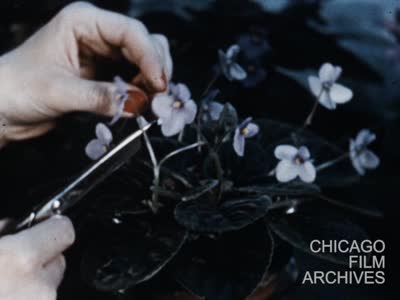
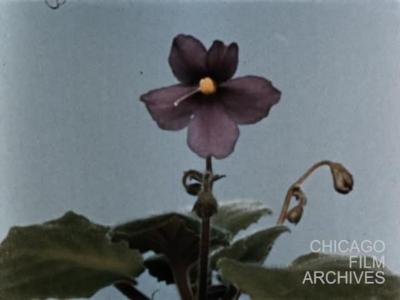
It's a good idea to remove the antlers here and they're fastened right on to the petals of the flower So if you just remove the petals you'll notice that the antlers come right along with them Then we'll go over and take the antlers from this other variety And The the antlers of the African violet usually don't open of their own accord Most flowers do and this is something that's quite different about the African violet So if you take a little pair of nail scissors and just cut those open so that the pollen Can come out and bring that over and just dust some of that yellow pollen right on the end of the stigma And that's this little sort of hair protrusion If you look at the African violet very carefully the flower you'll see this this little hair -like protrusion sticking out at a very abrupt angle and away from the Antlers just as if nature intended that the pollen from the same flower shouldn't get on there It's also a good idea now to Label to take a little tag and tied around the stem of the flower that's been crossed and mark the parentage of The two varieties that you've used to making this cross And now in about six to eight months depending on what variety you're using and also the season of the year that Well that Stigma or where you've made the cross where the flower was will begin to swell and I have On this plant.
I'll show you one Here it is.
It's kind of hidden away under the leaf here, but I'll just pull this out so that you can see it Now here's a seed pod that's forming it's not fully developed yet When it's ready to take the seed from it, it'll turn brown and get rather brittle Then you can break that open a lot of people think it's a good idea to keep the seed in a dry place for Another month at least before you plant it Well, there's that see that pot isn't quite ready to Open up yet.
I have some seed, you know You can buy African violet seed at some of the leading seed stores.
It comes very carefully wrapped up because Well, it's it's quite valuable.
I don't know just what it would cost a pound But I was checking the other day on snapdragon seed.
That's pretty fine, too It's not as fine as African violet seed is because this is just like dust But snapdragon seed is worth about six thousand dollars a pound.
That's over ten times its weight in gold and Of course you get millions of plants and when you buy a little package you get just a very small fraction of a pound now in planting the seed you want to use a pot that is perfectly clean because Well, if you have a dirty flower pot, you may have some fungus disease that will carry over and attack your new seedlings some people like to plant their seed in soil with a Little sphagnum moss on top but as a general rule anything that you can grow your African violets in That is the mature plants you can use for starting your seedlings now the important thing to remember is to spread the seed on quite lightly and Not to try to cover it because this as I said is just like dust.
It's so very fine spread it all around and Then Just take and tap the pot the side of the pot with your finger like this to jar it a little and that'll make the seed Settle down in there now when you water this of course you can't use a watering can You can't water it from above because it would disturb that seed so much.
It's a good idea to water the your seed the pot that your seeds in by putting it in a pan and letting the moisture soak up and Here's some seedlings that I wanted to show you That have all been developed from seed from the same seed pod And you can see how some of them are much further along some of these little plants Are much larger than the others.
Well a one reason for that is that some plants have carried the or inherited the characteristics from one of the parents used and some of these others from the other and Of course some plants grow faster than others so that can account for the difference in the size here I'll to pop these up I'll take a pot here with some soil some of our regular soil mixture and just lift this out with the spoon very carefully and set it over into this other pot and Put a little more of our soil potting mixture around there and of course this can stand watering from above because That's pretty good size.
You want to make certain that you water them all right away.
I Think that'll give you an idea of how to hybridize or cross African violets get your own seed and plant it and raise some plants from seed Think you'll find it very interesting you want to give them a fair amount of light put them in the open window until they're sprouted and Protect them from the real hot Sun I have some time -lapse pictures to show you of some of the seeds Germinating and plants growing but first another message that I'm sure you'll find interesting Well, let's just watch these time -lapse pictures of the African violets and listen to the music Well, here are some other pictures that I want to show you these violets belong to mrs.
Donnelly Hanson of Evanston, Illinois She grows them under artificial light down in the basement Mrs.
Hanson's very active in the African Violet Society here.
She's trimming off some of the dead or wilted flowers It doesn't help To grow them in the basement.
I'm sure you'll find some of them As far as the growth of the other Or development of the other flowers are concerned, but it trims the plants up and makes them look neater And when plants are entered in a any show or contest well all the dead ones of course are always trimmed off but here are some of mrs.
Hanson's plants there certainly Beautiful plants nice and healthy and look at those leaves Just as green and rich looking They'll run the other table she has the thermostat an auto thermostat a humidist at and the thermometer And here are some of the younger plants She starts lots of cuttings and she's done quite a bit of hybridizing Here's a nice tray full of cuttings that are well They've developed into young plants now that formed crowns and quite a few leaves coming up And here's the time switch Where She controls the amount of light that's given the plants each day the lights go on Automatically in the morning go off again at night Well, I guess that gives you an idea of the activity and the growth and How some of these flowers develop it's always been interesting to me to watch these plants grow and the speed it up action Well, hope you've enjoyed our little get -together today and be sure to come around and for our next regular get -together And I'll be seeing you then You