The Very Last Laugh, Part 1

Transcript (Download)

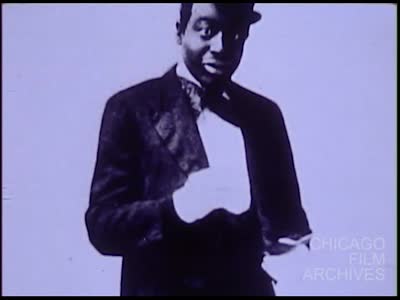
You You Surprise didn't I at Ebony I sailed through the air found their mark on startled faces The laughter started small but began to roll over the whole nation Did you see the latest Ebony comedy if you like to laugh go see it? That's what folks told each other There was never anything like Ebony the first black film company Ebony the first motion picture company specializing in all black comedies began its operations in 1916 Located on California Avenue in Chicago the Ebony studios are still standing in rickety splendor a reminder of the hilarious times gone by He throws the custard pie Yeah, you duck and it hits Tatum then you slam your pie at Sam and they chase you And the man who knows more about the Ebony Film Corporation than anyone is Luther Pollard the founder I was born in Mexico, Missouri January 4 One Eight seven eight By 1908 Pollard was a successful advertising Copywriter in Chicago his ads helped create a huge market for home motion pictures in 1916 he began his own film company The Ebony comedians were friends of friends performers But mostly they came to the studios because they'd seen Pollard's ads and wanted an opportunity to act in films I Had watched comedies and I saw that Patamine Was the thing that made Comedies Entertaining and I could see no reason why they could not excel as screen comedians And I finally decided to produce pictures with American Negro actors We were the first company that specialized in that a Parade of black actors and actresses joined Ebony Bill Starks Rudolph Tatum Sam Jacks Sam Robinson George Lewis Bert Murphy Yvonne jr.

And a bevy of Ebony beauties all intent on making audiences split their sides laughing All of them were from Chicago Ebony the old ads proclaim the all -black comedies the funniest on earth The Ebony comedy we are playing pleases us continue to send one of them each Sunday Ebony who thought up the name? I Said to my wife Can you think of a name meaning black? That it doesn't say black so she said why not call your organization Ebony But It remained for someone else to preserve a few of the Ebony films Charles David Ten years younger than Pollard.

He was employed by Ebony in the technical end of the business I started in the motion picture at a very early age And I've done everything under the Sun in the motion picture business lab expert cameraman director scenic artist script writer What have you I've done it and now They've talked me into being an actor and it's so much better be on the other side of the camera.

You can't imagine For almost 60 years David saved the Ebony reels, but all the early films were on night trade One by one they disintegrated Five reels were transferred to safety film and there are a number of clear passages Like this one from the comeback of Barnacle Bill It's a hazy drama the country boy in love with the country girl When her stern father also big in the stern played by Sam Jacks The Humor was universal in Ebony spies ala mode Sam Robinson believes there is a spy under every bed This film was produced during the last days of World War one when suspicion was high and a little slapstick helped ease the tension Detective Sam Robinson combs the headlines for clues his dreams of glory materialize When I was quite young but I was well pretty well around in the motion picture business and I run across a black man named Ruth Paulard and He impressed me right away as somebody that knew what he wanted Well, I first met Charles David.

I think that was oh possibly 19 hundred and Twelve we got together almost immediately I liked him he liked me.

He was rather a very Clever man and knew what he was talking about and he wanted to make motion pictures of Completely black characters for black and white theaters It wasn't made for propaganda or any other purpose, but wait completely for comedy I went to work for him and it was one of the happy days of my life because we've made pictures that were outstanding In the early years of filmmaking Chicago was an international film center Ebony was achieving distinction with its all -black comedies of the white studios S &A on the north side was the most famous Some of the most prominent of the early stars worked here Francis X Bushman Wallace Beery Ben Turpin Rod LaRocque Gloria Swanson Louis Stone HB Walpole Beverly Bain Charlie Chaplin Max Linda And the S &A mascot The studio was founded by George K Spoor and GM Anderson who was known as Bronco Billy the first screened cowboy hero And north of S &A was the American film manufacturing company the famous flying a Started in 1910 by Burt Hamilton former S &A studio manager The earliest of the Chicago studios was run by William Selig the Selig polyscope company It was operating as early as 1904 turning out melodrama after melodrama many of which starred Kathleen Williams But where was a black man a woman going to receive employment in motion pictures at Ebony Pictures were produced in a studio at 2330 North California Avenue Some of the best ones were made in that studio At Ebony there was a rich outpouring of wildly funny slapstick comedies Some filmed out in the snow in front of the studios Sam Robinson spy detective working on his own for his country goes looking for German spies Sam Robinson spy detective working on his own for his country goes looking for German spies The name on the box is Schwartz probably a German spy Schwartz again You You Wrong again Sam the eternal optimist is undaunted by bad luck and near misses Pollard felt black should add their own view of the landscape of humor to the film industry He was convinced It was special Oh Over at the Ebony studios The black comedians were having the time of their lives In a field dominated by white studios.

Ebony was a major miracle a thriving company of black actors and actresses working for the laughter of the human race and good paychecks to Bad Luther Pollard the founder of Ebony was born two years after the United States celebrated his centennial as a boy He saw no motion pictures the camera that could take them wasn't even invented our father The owner Of a 10 -chair Barber shop in the ring go house In Mexico, Missouri where I was born He practically gave the business away and Came to Scorgo hoping to get in the vicinity of evidence because of North worship and he was looking for a place to settle and open up a barbershop He came to Rogers Park I think that was about 1885 or 84.

I Was a kid about six or seven years old I first went to the district school in Rose Hill they call it its water now With a one -room affair big stove up in the middle And all classes were in that one room I Quite a number of the kids Your German descent I remember the teachers name McGuire miss McGuire Charles David who was one of Pollock's cameraman recalls his own childhood He worked as a very young man at the SNA studios with kids from a slum neighborhood called little hell They were employed in 1908 in the SNA laboratory.

I Grew up in an ordinary neighborhood of mixed nationalities a little of everything but the kids that worked and in the technical crew up at SNA they were I Came out of little hell and boy they they were really little devils, but they were good at heart and good little mechanics In Chicago black children had no chance to learn any of the technical trades associated with filmmaking colored children didn't have opportunities and Little if any chance was given to black actors and actresses black roles were usually played by white people Even in a Civil War melodrama the black servant was white underneath the cork makeup.

Oh they had no opportunities Occasionally a black maid was played by a black actress Or you might see genuine blacks is almost part of the scenery for years black parts were portrayed by white Actors and the white actors seemed to get a pleasure out of putting burnt cork on their face and doing the thing Kind of long came Luther Pollard with the idea that black Pollard was the first But one white film pioneer who overlooked prevailing fixed notions about who should and should not appear in films was the German immigrant Sigmund Lubin He ran the Lubin studios in Philadelphia His trademark was the Liberty Bell Lubin not only employed black actors and actresses he featured them in some of his slapstick comedies Maddie Edwards was one of his stars often portraying a rambunctious cyclone in the kitchen The team of John and Maddie Edwards appeared in many one real Lubin comedies The Lubin all -black comedies were no more far -fetched and outrageous than most of the comedies of the day But every time a filmmaker resorted to ridiculing a race nationality or an economic stratum of society He kept the pots of prejudice boiling In addition to John and Maddie Edwards Lubin introduced other silent comedians Oliver Hardy was known as babe Hardy when he appeared in Lubin comedies If you got tired of slapstick any one of the early studios could provide you with an Indian love story This is Lubin's legend of lovers leap I Can't recall of those pictures.

I never liked Lubin's production either what it seems as though that They were properly handled Back in the olden days material for pictures were kind of hard to come by so we Naturally turned to the Swedes and the Irish and the Jews and over at S &A Wallace Beery played a Swedish maid as a dim -witted loomy the studio made a fortune from these comedies sweetie the swatter topsy -turvy sweetie sweetie and the double exposure Sweetie skate countess sweetie sweetie learns to ride Sweetie learns to swim sweetie in boardville sweetie and her dogs we dees hopeless love Sweetie's hero sweetie goes to college sweetie's finish sweetie and the Sultan's present sweetie at the fair sweetie and the hypnotist sweetie collects for charity sweetie the troublemaker In films the black man or woman was stereotyped to naive happy -go -lucky dangerously fond of chicken At S &A in Chicago few blacks were ever employed But the tradition of mixed animated characters was well established Model animators Howard Morse and Charles Bennis built and animated little dolls a white boy called funny face and a black child Mose They were good friends and comrades in many adventures Each doll had scores of faces Funny face and most could speak all of their silent lines The only integration at S &A occurred among the film puppets funny face and Mose friends and fun years before the our game comedies But Ebony had the last laugh when it borrowed from S &A's 1916 production of Sherlock Holmes Ebony's version was called the black Sherlock Holmes The S &A's William Gillette the famous actor played Holmes for S &A with a liberal amount of stagey ham The murderer cowering in the corner over there What a desperately crime moriarty Sam Robinson as Holmes wore his four -napped cap at a rakish angle as he lurched after criminals I believe Gillette's betrayal was haunting Sam Robinson played Holmes for Lads It was Pollard who brought real black film players together He had to dream Ebony up promote it get backers for it once the pictures were produced he had to overcome exhibit of prejudice There was just a feeling That they wouldn't be accepted We ran into that Exhibitors would turn them down Then they would And they booked one or two of them and there's nothing like them Well in charge the General film at New Orleans And he said at first These pictures Didn't go in New Orleans, but now they do The kids go wild about them adding a woman to me.

That's all it's a question of good stuff The result was Ebony Gloriously nutty a little world a larger world of filmgoers began to love Ebony the first black film company Oh Oh Oh Oh You

Do you know more about this item?
If you have more information about this item please contact us at info@chicagofilmarchives.com.