



Jerzy "George" Skwarek Collection
The films document travels with friends and clients of Polish travel agencies, mainly in the United States, including Florida, California, Texas, Arizona, North and South Carolina, and Peru. Among Skwarek’s captured friends is the famous Polish actress and singer Kalina Jędrusik. The Midwest is portrayed in films from Chicago and Wisconsin, as well as in documentation of his visits with friends to the Ponderosa Sun Club and Naked City in Roselawn, Indiana.
The collection also includes home movies from the early 1950s of an unknown moviemaker and family. These include trips to Saugatuck in Michigan, Starved Rock State Park, Illinois, Florida, Bermuda, and Mexico. Additionally, Skwarek’s collection consists of short commercial pornographic films, including Wet & Wild, which was likely directed by Edward D. Wood Jr. in 1973.
Collection Items
- 3 Les. 18
- 3 Les. US.
- 3 Podróż po USA II. S.D–Calif.
- 1948 Football
- AIR SHOW 77+75
- Ala Głowacka
- ARIZONA+CALIFORNIA+WYO+S.D. - 82
- ARIZONA VII.79 I
- ARIZONA VII.79 II
- AUTEM DO COLORADO, ARIZONY I TEXASU I. VII.77
- BAHAMAS V.1976
- Bermuda 1958
- BRASIL 83 I cz.
- BRASIL 83 II cz.
- CALFIL XII.82+WISCONSIN DELLS X.83 r. z NIVA. JÓZEF
- CALIF. 80. VII
- CALIF. z Moniką III.83
- CALIFORNIA XI.82 z Giną i VW
- Caraiby 78. St. Lucia, St. Martinika, II
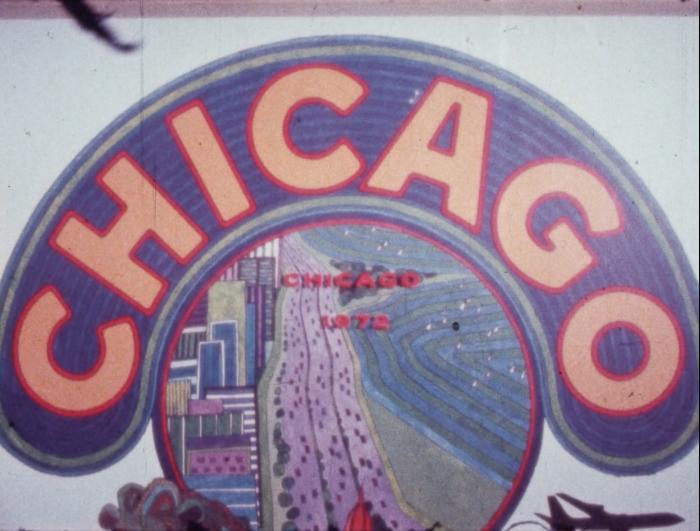
- CHICAGO 72
- Chicago I 1979
- COLORADO 10-18.IX.1983
- EKWADOR (z Krysią i Ewą) i PERU (Wanda, Gosia, itd.) III.1984 I cz.
- Fishing trip June 1-13, 1951: Mary Skala Lodge
- Fla. 77. Fla-CG:S.W.-D-Cobana
- FLA. 77 II Fontainb.-Sanibel
- FLA.79. Boat Show–Silver Springs: III
- FLA.79. Busch Grds–Key Largo: II
- FLA.79. Wjazd–Busch Grd.: I
- FLA. 82. MILENA
- Florida 1951-1952
- Florida 1980 II
- FLORIDA P. I, II-III.1978
- FLORIDA XII.1983 CHRISTMAS 83 z Markiem, Alice, Krysią Grasz, Józef.
- Floryda 78, III. Serpentarium-Tahiti-Shore Prk.-Powrót
- Floryda 1980
- Floryda 1980 I.Wyj.-Disney
- FLORYDA. JESIEN 82
- FLORYDA VI.79
- FLORYDA VII 1975
- Flower Show II cz.
- Fontanna nocą
- George Chicago Downtown+Janusz
- Golf 1952+1953+Tippecanoe
- HAWAII II
- Highwaje
- Hokej z Adamem
- II. FLORYDA 75. ZEPSUTY
- Jamaica 78
- JAMAJKA II.1984
- KALINA J w TEXASIE i z PAWŁEM na FLA X.81
- Lake Front Festiw.
- Lincoln Nebraska + Pioneer Village. Hała!
- Mazowsze w Miami 76.
- Michigan IX.75
- Mistrzostwa Świata. ŁACINA. NY 73
- New York z Empire St. Bld
- Niagara 72
- NORTH CALIFORNIA. SACRAMENTO–SAN FRANCISCO
- Nowy York. Koniec
- Okefeneokee VI.79
- Olimp.76
- OLIMPIADA MONTREAL 76
- OUR HOUSE
- PANDEROSA VII.77
- Park Marquette - Starved Rock - Brown Park, 1951
- Part I Mexico - 1955
- Part II Mexico - 1955
- PERU /MACCHU-PICCHU/&PANAMA III.84 IV cz.
- Po USA - V.76, cz.I
- Po USA - V.II.76r.
- Po USA V.III.76r.
- PONDEROSA 22.VIII.76
- PONDEROSA 25.VII.1976 SUPER COLOR
- PONDEROSA SIERPIEŃ 77
- PONDEROSA VII.79
- PONDEROSA VII.81
- Ponderosa VII.82
- PONDEROSA VII.83
- PONDEROSA VIII.83
- PUERTO RICO & VIRGIN ISLANDS 77
- Raid Polski Fiat
- Sagatuck 1959
- Santa Village Adventureland
- Śląsk
- SMOKY MTNS. 81.
- SOUTH CALIFORNIA. LOS ANGELES–SAN DIEGO
- STACH
- Texas 77. cz.II
- Torreadorka z obrazu
- [untitled]
- [untitled]
- [untitled]
- [untitled]
- [untitled]
- Wet and Wild #101 HDS
- Wisc. Dells 8.79
- WISCONSIN DELLS, NIAGARA, NEW YORK
- Wystawa
- Z Janusz + Pola Kow/z auta
- ZF+IM
Jerzy “George” Skwarek was born in Warsaw, Poland on November 9, 1935. In 1952, he graduated from the construction technical school in Zakopane [Technikum Budowlane]. Then he worked in Unified Municipal Construction in Katowice [Zjednoczenie Budownictwa Miejskiego]. After completing a course for ski instructors, he ran training ski camps in 1955-56. Skwarek studied exploration geology in the following years at the AGH University of Krakow [Akademia Górniczo-Hutnicza im. Stanisława Staszica w Krakowie]. After graduating, he worked as a chief geologist in Busko-Zdrój (1961-1962). He passed the exam to become a Tatra guide in Zakopane and worked between 1962 and 1971 for the Polish Tatra Society [Polskie Towarzystwo Tatrzańskie]. After passing the state exam to become a foreign tour guide, Skwarek worked at Poland’s largest travel agency, “Orbis” [Polskie Biuro Podróży “Orbis,” then functioning as a state enterprise] in Kracow and Warsaw. The bureau resumed foreign tours, mainly to Eastern Bloc countries, after the political thaw in 1956. During this period, Skwarek recorded many films with a Super 8mm camera, mainly on the subject of travel, both in Poland and during trips abroad, especially to Central and Eastern European countries. At the same time, he was involved in photography, especially travel photography. As a member of the Polish Photographic Society in Krakow [Polskie Towarzystwo Fotograficzne], he has participated in many competitions and photographic exhibitions and worked for Polish magazines, including Światowid, Przyjaźń [Friendship], Kontynenty [Continents], Dziennik Ludowy [People’s Daily], and Przekrój.
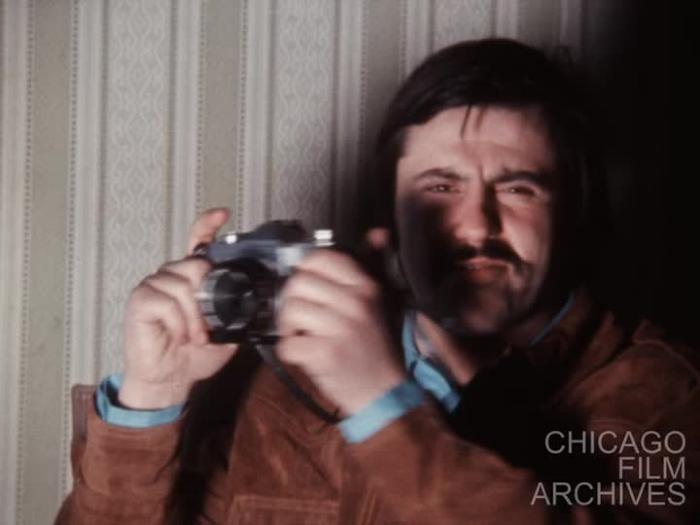
In 1971, he had the opportunity to travel to the United States thanks to an invitation from the mother of a friend whom he had shown around Poland. He emigrated to the US on the famous Polish ocean liner “Batory” in 1971. During this voyage, he presented an exhibition of his photographs of the Tatra Mountains and Podhale on board the ship. He prepared for the voyage on the Batory with the intention of not returning to Poland. He took with him not only his three cameras and a Super 8 mm camera, but also darkroom equipment. After arriving in the United States, fascinated by the modern metropolis, he recorded his first film, “Chicago.” After arriving in Chicago, he first worked as a photo lab technician (1971-1972) and then as a photojournalist for the Polish-American press (Dziennik Związkowy [Polish Daily News, the largest and the oldest Polish language newspaper in the US], Relaks [Relax], Dzisiaj [Today], and Kontra [Contra]). From 1974, he organized and led tours, especially for Polish communities and tourists from Poland, initially only in the United States, and from the 1980s – after legalizing his stay in the US – also around the world. During these trips, Skwarek made amateur films capturing nature, his friends, and his clients. Among them is the famous Polish actress and singer Kalina Jędrusik. A large part of Jerzy “George” Skwarek’s film collection is taken up by films shot at the Ponderosa Sun Club and Naked City in Roselawn, Indiana.
In the 1970s and the first half of the 1980s, Skwarek made several dozen Super 8 films, mainly documenting his travels. Almost all of these films are silent. The only surviving exception is the documentary Chicago 1972 (32 minutes), which was created as a result of Skwarek's fascination with the modern metropolis and depicts Chicago, mainly its central districts, from dawn to night. Skwarek began recording a magnetic soundtrack for this film (commentary with background music). However, only the first few minutes of this soundtrack have survived (it was probably never completed). In addition, Skwarek’s private archive contains several cassette tapes with his commentary on silent films (recorded while playing the film from a projector) or recorded during trips (some films show people holding a tape recorder, on which these recordings were most likely made). In the second half of the 1980s, Skwarek began recording his films on video. He was particularly fond of the Video8/Hi8 format, whose small cassettes and compact cameras worked well for travel. Skwarek recorded hundreds of hours of footage in video.